
The Geography of God: How the Wilderness Became My Church: Finding Faith, Love, and Liberation in the Land while experiencing homelessness.
- MoSoul1914

- Mar 4, 2025
- 4 min read
Updated: Feb 24
The Spatial God: Discovering Faith in the Wilderness
There was a time when I believed God could only be found within four walls, in the echoes of sermons and the chorus of hymns. But when I found myself homeless, sleeping in parks, bus stops, and abandoned buildings, I learned otherwise. I realized that God is not confined to buildings made by man. I discovered that the Divine does not live in pews but in the whispering wind, in the silent snowfall, in the rhythm of the rain against the earth. I learned that my God is spatial.
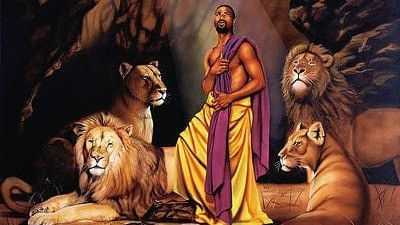
While reading God is Red, I was reminded of one of the first moments that I understood this truth. Back when I was sleeping in the cold, alone, fearing that the night might take me, I found myself surrounded by packs of loose dogs. I was terrified, certain they would attack me. But instead of attacking me, they lay beside me. They protected me. Their warmth, their presence, became my sanctuary. I had my Daniel moment, a testament to a God who moves through creation, a God who is not limited by walls and stained glass but who exists in the very fabric of existence.
Psalm 91:11 says, "For He will command His angels concerning you to guard you in all your ways." In those moments, I believed those angels had fur and gentle eyes.
I remember nights sleeping in the mud, where the earth felt like it was swallowing me whole, and yet, in those moments, I found peace. When it rained, I would seek shelter, and yet there were nights when the heavens poured down upon everything except the small corner where I would lay. How could I not see the hand of God in that? How could I not feel the Divine stretching across the land, making space for me, preserving me?
Isaiah 25:4 declares, "You have been a refuge for the poor, a refuge for the needy in their distress, a shelter from the storm and a shade from the heat." I lived that scripture. I felt its truth in my bones.
The reading reminded me that Indigenous traditions have long understood what so many of us have forgotten: that space, land, and spirituality are intertwined. The earth is not a commodity but a living, breathing testament to the divine. This realization shifted something in me. I no longer saw God as an old man sitting on a throne in the sky but as the very force that moves through the land, the creatures, the rivers, and the wind.
Geographies of Intimacy: Love as Resistance
If God is Red reminded me of the spatial nature of faith, Geographies of Intimacy made me reflect on the power of love and connection as a tool of resistance. When you are homeless, people look past you. You become invisible. Society conditions them to see you as a problem, as something to step over rather than someone to acknowledge. But in the midst of that dehumanization, there were moments of intimacy that saved me.
Intimacy is often spoken of in hushed tones, reserved for romantic love, but intimacy is the force that keeps the world from collapsing under the weight of cruelty. I remember the strangers who looked me in the eyes, who spoke to me as if I mattered. I remember the shared meals, the quiet moments of understanding with others who had nothing but still found something to give. Love, real love, is a refusal. It is a refusal to accept the conditions imposed upon us, a refusal to see another as less than human.
Matthew 25:35-36 echoes this truth: "For I was hungry and you gave me something to eat, I was thirsty and you gave me something to drink, I was a stranger and you invited me in, I needed clothes and you clothed me."
The reading pushed me to think about how love is always at the center of resistance. The Black Church, the Civil Rights Movement, the movements for Indigenous sovereignty—all of these are rooted in a deep, unshakable love. Love for the people love for the land, love for a future that is not yet here but that must be fought for. Love that is not soft but radical. Love that does not simply console but transforms.
James 2:15-17 reminds us, "Suppose a brother or a sister is without clothes and daily food. If one of you says to them, ‘Go in peace; keep warm and well fed,’ but does nothing about their physical needs, what good is it?" Resistance is love in action.
Liberation and the Power of Spatial Faith
If I learned anything from those nights in the wilderness, it is that faith is not stagnant. Faith moves. It shifts. It takes shape in different ways, depending on where you stand. Faith is in the way the earth held me when I had no home, in the way the dogs became my protectors, and in the way love found me even when I felt unworthy of it.
Psalm 34:18 reminds us, "The Lord is close to the brokenhearted and saves those who are crushed in spirit." I was both, yet God never abandoned me.
The readings reminded me that faith is deeply tied to space and intimacy. That Liberation is not simply a political act but a spiritual one. That to be free is to reclaim the right to exist in space, to be seen, to be loved.
John 8:36 proclaims, "So if the Son sets you free, you will be free indeed." True freedom, I have learned, is not found in the accumulation of material wealth or status. True freedom is found in knowing that God walks with you, no matter where you lay your head at night. Romans 8:38-39 affirms this: "For I am convinced that neither death nor life, neither angels nor demons, neither the present nor the future, nor any powers, neither height nor depth, nor anything else in all creation, will be able to separate us from the love of God."
I no longer see God as distant. I see God in the land, in the creatures, in the people who refuse to let the world make them bitter. I see God in the hands that reach out, in the voices that refuse to be silenced, in the hearts that continue to love even in the face of suffering.
That is the geography of God. That is the faith I hold onto. That is the Liberation I seek. - Byron D. Brooks "MoSoul


Comments